After the conclusion of the COP30 climate change meetings in Brazil last month, some observers were quick to pronounce them a failure. Why? Were they a failure?
Eyes on the Prize?
Much of the criticism centered on the failure of the parties to agree to a statement pledging to phase out fossil fuels.
In a Guardian piece entitled “Another COP wrecked by fossil fuel interests,” Genevieve Guenther highlighted that failure, and called the final statement of the parties, “a form of climate denial.” Heatmap News’ email blast called it “Dirty COP30” and headlined its summary this way: “COP30 ends with a fossil fuel victory.” The New York Times also called it a “victory for oil producers.”
But others were more circumspect.
Reuters described COP30 as an “uneasy” compromise that tripled climate finance for developing nations but frustrated those who wanted more. World Resources Institute issued a statement entitled “COP30 Delivers on Forests and Finance, Underdelivers on Fossil Fuels.” It also mentioned progress on “pledges for Indigenous Peoples” and “sustainable fuels” as pluses. Indeed, even Heatmap News paired their gloomy email blast with a longer Heatmap story that was more positive and nuanced, crediting the conference with advancing the ball on (i) defining a just energy transition, (ii) reviving discussion of a “roadmap” away from dependence on fossil fuels (which had been part of COP28 but not COP29), and (iii) confronting the question of how to respond to “overshooting” the temperature rise target of 1.5 C.
So COP30 wasn’t entirely a failure. Of course, no one is ever perfectly happy with contentious group choices. But complete elimination of fossil fuels seems (to me, at least) to be a very strange (but common) red line for activists.
Let’s put aside the role fossil fuels may play in bettering the lives of peoples suffering from extreme energy poverty — e.g. by substituting natural gas for wood or charcoal in home cooking and heating, or in provision of affordable petroleum-based products. If atmospheric concentrations of greenhouse gases are driving climate harms everywhere (they are), then it is net carbon emissions that matter, not which fuels we use. Most experts recognize that if it proves politically or technologically impossible to eliminate all uses of fossil fuels, we may nevertheless be able to get net emissions down to (or below) zero.
Yet, in the Guardian piece linked above Genevieve Guenther challenges this obvious truism with almost Trumpian hand-waving (quote in italics):
Ursula von der Leyen, president of the European Commission, was telling a press conference at the G20 that “we are not fighting fossil fuels, we are fighting the emissions from fossil fuels.” … [T]his statement … is in itself nonsensical – akin to saying “we are not giving up eating ice-cream, we are giving up absorbing the calories from that ice-cream.”
Guenther’s error is right there in the metaphor.[1] Eating ice cream is not the problem unless we eat too much of it and fail to use exercise to manage the impact of eating ice cream and other foods high in empty calories. We don’t give up ice cream altogether. Our current level of reliance on fossil fuels (without limiting carbon emissions) is like eating too much ice cream (without exercising).
Why is net zero emissions a better goal than zero emissions? Because the future is techno-economically uncertain.
If it costs $X to permanently sequester CO2, and $10X to eliminate the CO2 emissions from producing certain goods, choosing the more expensive option is socially harmful, particularly to people at the lower end of the socioeconomic ladder. So is choosing to forgo affordable net zero energy that comes from fossil fuels. Assuming away possible truths makes no sense; nor does foreclosing policy options today that might be nice to have later.
Guenther is neither a climate scientist nor a social scientist; she is a Renaissance scholar and climate activist. Perhaps she can’t imagine that sequestration could ever be cheaper than the alternative, and assumes that anyone who suggests that it could be is a disingenuous tool of fossil fuel interests.[2] Maybe she has other reasons for obfuscating the distinction between fuels and emissions. Either way, her eyes are not on the prize: namely, stabilizing and then lowering levels of atmospheric carbon. That is how we make climate progress.
Complexity, Moral Ambiguity & Politics
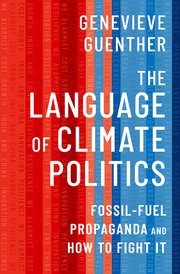
But Guenther’s is a common view among denizens of the online progressive communities. She has tens of thousands of online followers. Her book on climate politics will sell many more copies than mine ever will. Her argument resonates, regardless of its flaws, because it is simple and blames a villain other than those of us who choose to use fossil fuels.
Some of the largest oil and gas companies employed researchers who confirmed the full effects of greenhouse gas emissions many decades ago, even as their lobbyists challenged its existence. Guenther and others infer from that that those companies prevented Congress from putting the U.S. on a path to net zero by confusing the public and buying off politicians. That is a very dubious inference (for reasons explained in Climate of Contempt), but it has led large swaths of the country to think of fossil fuels as evil. And it has triggered an equally-flawed, mirror image argument on the right promoting fossil fuels as virtuous and good. That latter argument may be reducing GOP support for the energy transition.
Of course, fossil fuels have no moral valence. They are neither evil nor good. We rely on them because they are useful and because they are relatively cheap. And they are relatively cheap in part because some of their social costs — including the damage being done by climate change — are not reflected in their price. They are part of a difficult, complicated collective action problem we need to solve, not the villain of a morality play.
But that truth has trouble breaking through in today’s crowded public square, so confusion about their moral valence will be a feature of both parties’ political campaigns of 2026 and 2028. Lots of oil and gas industry employees want to support Democrats; and lots of Republicans worry about climate change. But Democratic Party politicians who “accept” that support will have to explain that support to primary voters; and Republicans who take climate change seriously will have to explain that to their primary voters.
Thanks Internet. This is just one of many issues around which ideological and social media makes us angrier and dumber.
So strap in for election season energy and climate debates that amplify the most extreme voices that ignore complex realities. And if you can participate in those debates by being a force for a more nuanced, less judgy understanding of the energy transition and what it entails, good for you. And thanks in advance. – David Spence
———————
[1] I have explained my differences with Guenther before. See my criticism of her hyperbolic approach to climate politics in chapter 4 of my book and this review of her book on climate rhetoric.
[2] One way to understand what getting to net zero emissions might entail is to research the specific questions involved. What do experts say about the cost of eliminating 90% of carbon emissions from electricity production versus the cost of eliminating the last 10%? What about non-energy products produced from fossil fuels? What is carbon fiber and how is it made? How could it be made without using petroleum? What is Kevlar and how is it made? How could it be made without petroleum? How can we produce zero carbon aviation fuel? Etc. etc.