There is ever-more misinformation and fakery on the Internet every day. We learned recently that a large percentage of political accounts posting on X are fake, and the fake accounts tilt toward the ideological right.[1] Facebook has become littered with completely false stories about NFL players. Some of those stories are attempts to manipulate political opinion, as when anonymous social media accounts disseminated false stories about NFL players supporting the late Charlie Kirk. Extremists are particularly adept at using social media to build followings based upon toxic narratives and misinformation. And the ease with which we can all use AI to create deep fakes makes it that much easier to “hijack the vibe” [read: disseminate falsehoods] online.
I have previously expressed the hope that we voters will eventually recognize how today’s online information environment makes us dumber and angrier by the day:
[I]t would improve our politics if more voters treated political discussion on social media as the danger it is and monitored that danger accordingly. We ought to treat our movement through the Internet with intellectual and emotional care: get in, get only what we need, and get out. While there, we should move from place to place in the same way that visitors to Yellowstone National Park stick to the boardwalk to avoid falling into deadly geysers. We can try to be more aware of the conditions that tend to distort to belief formation. If we have to be online, the best we can do is to watch out for those distortions and their effect on our own perceptions and beliefs, and to promote actively open-minded thinking when we do post online.[2]
Are we starting to see glimmers of that sort of recognition?
Beware the lure of contempt for the out-group
To be sure, it is still easy and profitable to use misinformation to cultivate hate against other groups. Lots of research supports the notion that there is even an instinctive comfort or enjoyment associated with hating an out-group.[3] In a 2005, when the Internet was in its infancy, economist Edward Glaeser summarized the academic literature on in-group/out-group hatred as follows:
[H]atred is almost always internally consistent: people say that they hate because the object of their hatred is evil. This fact leads some observers to think that hatred is caused by the crimes of the object of hatred.… Yet the relationship between hatred and the criminality of the hated group is often minimal. While Nazis may have believed stories of Jewish atrocities and southern racists may have thought that blacks presented a threat to southern womanhood, freed slaves and German Jews are relatively innocent .….
In fact, antisemitism, anti-black hatred, and anti-Americanism have all been fostered by false stories, manufactured and spread by “entrepreneurs of hate.“
Politicians… can spread hate creating stories about the dangerous character of a minority or out group. Voters who hear these stories think they might be true and will investigate those stories. Only if there are private benefits from learning the truth….[4]
Most people are cognizant of how the Internet amplifies this cycle of anger and contempt, even as they continue to participate in it. Today, Glaeser’s observations of ethnicity- and nationality-based hatred toward an out-group apply equally well to the feelings of American partisans toward the other party, something polling has confirmed.[5] Not coincidentally, the officials who populate the second Trump Administration have been more open about their contempt for Democrats and willingness to use law as a tool of their “wrath.” Just as Congress was about to use its power to force fuller disclosure of the Epstein files, the Administration invaded Venezuela, threatened war with Iran and Greenland, and increased its use of violence in immigration enforcement in Minnesota. All of which prompts cycles of anger and hatred.
In the energy context, expressing contempt for Democrats includes expressing contempt for renewable energy. GOP politicians now practically trip over one another to express contempt for it because it helps them win the support of the MAGA right (who dominate party primary elections).
“Believe me, nobody hates wind [energy] more than I do.” Rep. Jeff Van Drew (R-NJ)
“[F]ar-left regulatory decisions … in favor of expensive and unreliable wind and solar have handicapped our grid.” – Rep. Brett Guthrie (R-KY)
“[T]hose god-forsaken [IRA] subsidies are killing our energy, killing our grid, making us weaker, destroying our landscape, undermining our freedom.” – Rep. Chip Roy (R-TX)
Van Drew, Guthrie and Roy represent seats that have been considered “safe” for the GOP in the general election; these remarks signal their MAGA bona fides to the MAGA voters who dominate primary elections in their districts.[5]
Glimmers of hope
People may be getting sick of the way the Internet winds them up, both politically and otherwise. Recent movements to limit access to toxic online environments offer reasons for hope.
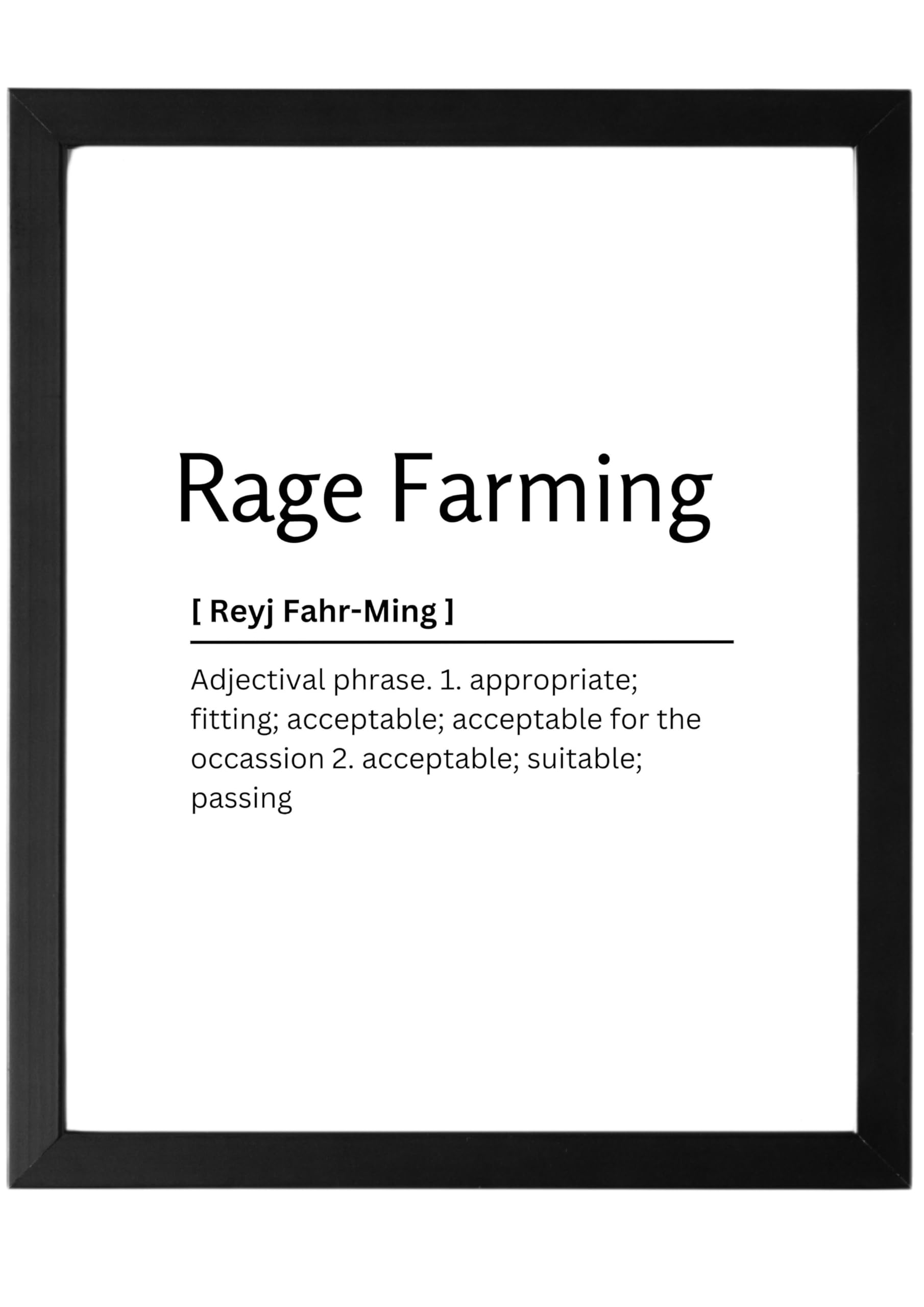
More and more states (and schools) have decided to ban screens during the school day. Australia has passed a law outlawing the use of the most destructive social media platforms by children under 16. And more and more people are paying attention to the public-facing academics, like Jonathan Haidt and Scott Galloway, who are crusading for remedies like these, and highlighting the ways that online “rage farming” manipulates us. These are hopeful first steps.
But if we want to stop rewarding entrepreneurs of hate, we adults will have to start policing our own individual behavior online voluntarily. We cannot rely entirely on laws that force restraint because statutory limits on even harmful political speech will run afoul of the First Amendment. And passage of constitutional legislative remedies — like holding platforms liable for clear defamatory speech — would require the very bipartisanship that the political climate of contempt makes nearly impossible.
Anecdotally, we are seeing some hopeful signs that today’s college-aged young people are more amenable voluntary self-regulation of internet usage than compared to the generations that preceded them. They are familiar with the mental health harms induced by they online world; they are aware that the phrase “digital detox” has medical connotations. I recently screened a pre-release version of a forthcoming documentary about AI in which undergraduates here at the University of Texas reported that they avoid using some online tools because they recognize how it slows development of critical thinking skills. And consider this report from a Yale professor who asks students to give up their smart phones for a month, with predictably positive effects.
What about the rest of us? Are we beginning to recognize the harm online propaganda is doing to our political sensibilities? Perhaps. The University of Michigan’s National Election Study 2024 data shows partisan feelings about the opposing party plateauing (albeit at a low number) after decades of decline. Perhaps active partisans are tiring of treating politics like a righteous war; or perhaps less partisan voters are becoming more savvy consumers of political information, and actively seek out the responsible representatives of opposing views.
Democracy requires each side to accept, peacefully, rule by the other. The Trump Administration’s assault on liberal democratic norms, openly partisan implementation of the law, and careless approach to the use of violence increases the levels of partisan contempt, and the probability of more political violence. But the wisest and strategically smart response is to take a breath, and to redirect anger toward changing votes. And it wouldn’t hurt to separate ourselves from more of the online world, thick as it is with savvy entrepreneurs of hate.
Meeting violence with more violence and contempt with contempt won’t repair our damaged democracy. Are more people coming around to that conclusion? Let’s hope so. — David Spence
—————
[1] Interestingly, the New York Post and Fox News reported this story differently, emphasizing the fake accounts that supported the Palestinian cause in Gaza.
[2] Climate of Contempt, p. 221.
[3] Glaeser, The Political Economy of Hate, Q. J. Economics (2005), pp. 46-7 (emphasis added).
[4] See here, here, here, and here.
[5] Cook Political Report (behind a paywall) classifies all three seats as “safe” for the GOP using their PVI ratings. However, some analysts believe that the 2005 election results may render Van Drew’s seat contestable, even though Republicans enjoy a large numerical advantage there.