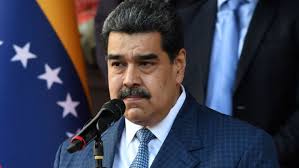
The implications of this morning’s removal of Nicholas Maduro from power in Venezuela are many, complicated, and — importantly — yet-unknown. These are just a few of the outstanding questions:
- The action probably violates international law,* and so will alarm allies and U.S. citizens for whom the rule of law is an important liberal democratic value. The official pretext for this action was neither restoring democracy in Venezuela nor securing Venezuelan oil; it was instead protecting Americans from a drug trade run by Venezuelan gangs. Will U.S. courts buy that argument, given the seeming remoteness of that threat?
- Will allies and adversaries interpet these events as a signal that U.S. policy has become more nakedly mercantilist, and worry that Greenland and its minerals are next? Donald Trump’s statement today that “we will be involved” with producing Venezuela’s because “we have great oil companies” certainly feeds that perception.
- Will the adventurousness of today’s action unnerve adversaries like Iran and Russia in ways that serve legal and legitimate foreign policy interests, including deterring a Russian invasion of Europe?
- Conversely, will Russia and China take it as a signal that the U.S. has accepted a “spheres of influence” philosophy? Will it embolden Russia to continue to try to impose friendly regimes on its European periphery, and China to force regime change in Taiwan?
- Will the action have positive or negative impacts on Venezuelan politics after the U.S. departs? Unlike Joe Biden, Maduro and the Chavezistas actually did steal an election, and Maduro’s removal could empower the legitimate winners of that election; or it could provoke a reaction there that inures to the benefit of the Chavezistas, leading to an even more repressive populism there. And those two possibilities hold very different implications for how Venezuela’s oil resources will be developed, and by whom.
- In the United States, will this action could rally conservatives who oppose Chavezism to Trump? Will it alienate Trump supporters who believed Trump would be the peace president?
Already there are Internet oracles proclaiming the truth of each of these propositions, some hungry for clicks and others just reacting, venting, or lobbying. But right now this is a list of unknowns. I do not know what actually drove this military action, nor what its consequences will be. Neither does anyone else, and there is no requirement that we form beliefs about these questions just yet, as much as online pundits might want us to.
There was a time when our information flows would leave us room to understand before we decided. It would present these complicated questions to us in a careful, well-curated way in the evening news and daily paper, leaving us the both time and mental space to come to conclusions slowly, as events unfold. Those days have long passed. Today the interested voter consumed a mix of fact-light speculation on TV — what Timothy Snyder calls “looking at someone who is also looking at a picture” — and/or even more uninformed “hot takes” online. Both harm public understanding, but the latter moreso than the former.
Which brings me to the energy implications.
The Venezuelan oil sector is at once typical and atypical of Latin American nations. On the one hand, Venezuela has larger oil reserves than any other nation. This is partly the country’s geologic good fortune and partly because it has struggled more than most to produce that oil, coming in at 18th in the world oil production table, behind Brazil and Mexico.
But Venezuela’s production history is fairly typical of its neighbors in other ways. Oil was initially developed there by western oil companies under contractual arrangements that most now consider exploitative of the host nation, triggering nationalization of those foreign company assets in the 1970s, along with the formation of the Venezuelan national oil company, PDVSA. When the economy slumped thereafter, western oil companies were gradually allowed back in to the country under less exploitative terms, only to have Hugo Chavez re-nationalize most of their assets in 2007. The only big western oil company to remain under the new, more stringent terms imposed by Chavez was Chevron.
Among people who believe that the big oil companies drive the U.S. policy decisions that affect them, it didn’t take long to ascribe today’s military action to their sinister influence.
The news broke at 4:30am ET. At 11:09am ET today, 350.org’s Bill McKibben had published a column entitled “Just Possibly, It’s the Oil?” Even before McKibben’s post, many, many Canadian social media accounts pointed fingers at Texas’ “heavy oil” refineries eager to replace Alberta oil sands oil with Venezuela’s heavy oil; and the Wall St. Journal speculated later in the day that refiners could be “the big winners.” Rep. Alexandria Ocasio-Cortez tweeted that “[i]t’s about oil and regime change.”And in a post on LinkedIn, NYU economist Gernot Wagner implied that Chevron’s interests drove the action, stating that companies like Chevron “use the power of the state to all but mandate” continuing demand for oil.
So lots of smart people subscribe to the idea that oil companies’ economic interests drive actions like these, and that those companies are likely to reap the benefits from it. And given our current state of ignorance, it is within the realm of possibility that they will turn out to be right. But there are also reasons why they might turn out to be wrong, Trump’s remarks about Venezuelan oil notwithstanding.
McKibben’s column acknowledged that it’s “far too early to prophesy the effects” of the military action, before going on to prophesy the effects of the military action. Specifically, he characterized nations at the top of the oil reserves list (linked above) as “almost without exception the same places we’ve been involved in endless fighting.” (Readers can look at that list and see if they agree.) While Donald Trump has a rhetorical track record of coveting others’ mineral resources, he has an even stronger track record of selfishness, both economically and politically. He seeks the former via various grifts and the latter by trying to create chaos in order to change the news cycle.
As far as we know right now, Trump will not make money if and when U.S. companies begin producing or refining Venezuelan oil. For their part, most big western oil companies think long term. Many will be reluctant to alienate PDVSA or invest in a politically unstable environment, one that could punish them when the U.S. military departs. If Donald Trump can convince a company to take over PDVSA’s operations on short notice, Chevron seems the only likely candidate. Prof. Wagner’s LinkedIn post was part of a thread highlighting how fortuitous Maduro’s removal is for Chevron as the only big U.S. oil company already operating in Venezuela. And if any company has the opportunity and cultural inclination to assist Donald Trump in a hasty takeover of PDVSA operations, it’s Chevron. But even for Chevron, doing so is a somewhat fraught prospect. While producing Venezuela’s oil could be lucrative for Chevron or other big U.S. companies, it isn’t exactly the kind of front burner priority for which they’d want to risk their reputations or long-term future prospects there.
Nor does the U.S. have a pressing need, or any need really, for Venezuelan oil. Indeed, oil supplies are sufficiently plentiful that the price of oil has not really changed much on this news. On the other hand, securing Venezuelan oil in U.S. hands may cut off exports to China, which takes almost all of Venezuela’s production. Those exports constitute about 4% of China’s consumption, so it will be interesting to see how China reacts.
As for Texas refineries, those refineries have enforceable contracts with Canadian oil sands producers in Alberta, and those contract will govern the parties’ behavior until the contracts expire. In any case, it may be years before any American refiners have the opportunity to refine Venezuelan oil. Nor will oil sands oil be without refinery customers; it is already being refined in Alberta, Ontario, Quebec and several U.S. refineries in the north that are much closer to Alberta. So the “Texas refineries win / Canada loses” theory seems speculative at best.
So, as our aspiring autocrat of a president flouts the law once again, I hope people will avoid the hot takes that push us toward half-baked conclusions and hasty judgments – or at least take them with a grain of salt. If you are hungry for understanding look to the real experts who bring care and circumspection to their characterization of events — people like Anne Applebaum. It is no coincidence that real international relations experts like Applebaum are not joining the the “this is about oil” tweet parade just yet.
Usually the politics isn’t nearly as simple as the hot takes suggest. Maybe this time will be different; maybe not. The energy consequences will unfold in time, and the truth about what drove this action will eventually come out. There’s nothing wrong with waiting for that information before deciding what it true. – David Spence
———-
* There is a line of thinking, represented by Jack Goldsmith, that says that the U.S. has excused itself from international law requirements (and gotten away with it) many times, so that the legality of the move is meaningless. Another line of thinking, represented by this editorial in The Independent, emphasizes the long term international relations consequences of violating international law.