Sometimes it is frustrating to watch energy politics in Pennsylvania from afar, because misinformation seems to be driving policy. Unfortunately, in today’s “post-truth” world that is not as rare as it should be. Responsible journalism competes for our attention with advocacy pieces, press releases, bots, etc. Online algorithms and the sociopolitical sorting of voters mean we aren’t exposed to important facts and opposing points of view like we once were.
Whatever the cause, Pennsylvania voters and politicians seem to be under the misimpression that building renewable energy facilities will make electricity more expensive. To be fair, in the few places where renewable generating capacity far exceeds the demand it serves, that is true. And there are renewable technologies for which it can be true generally, such as offshore wind). But neither of those conditions exist in Pennsylvania.
In Pennsylvania prices are rising because power demand is growing faster than supply. Getting new supply onto the grid is the job of the regional grid operator, PJM. PJM’s independent market monitor is so concerned about demand outstripping supply that it has asked the Federal Energy Regulatory Commissions (FERC) to prohibit the addition of new data centers there unless PJM can demonstrate that it has the capacity to serve them without threatening supply reliability. PJM has been notoriously slow to approve new plants, and has failed to prioritize the least expensive sources of supply — namely, onshore renewables.
If you have heard the “renewables are expensive” mantra, or are otherwise skeptical, take 5 minutes to investigate:
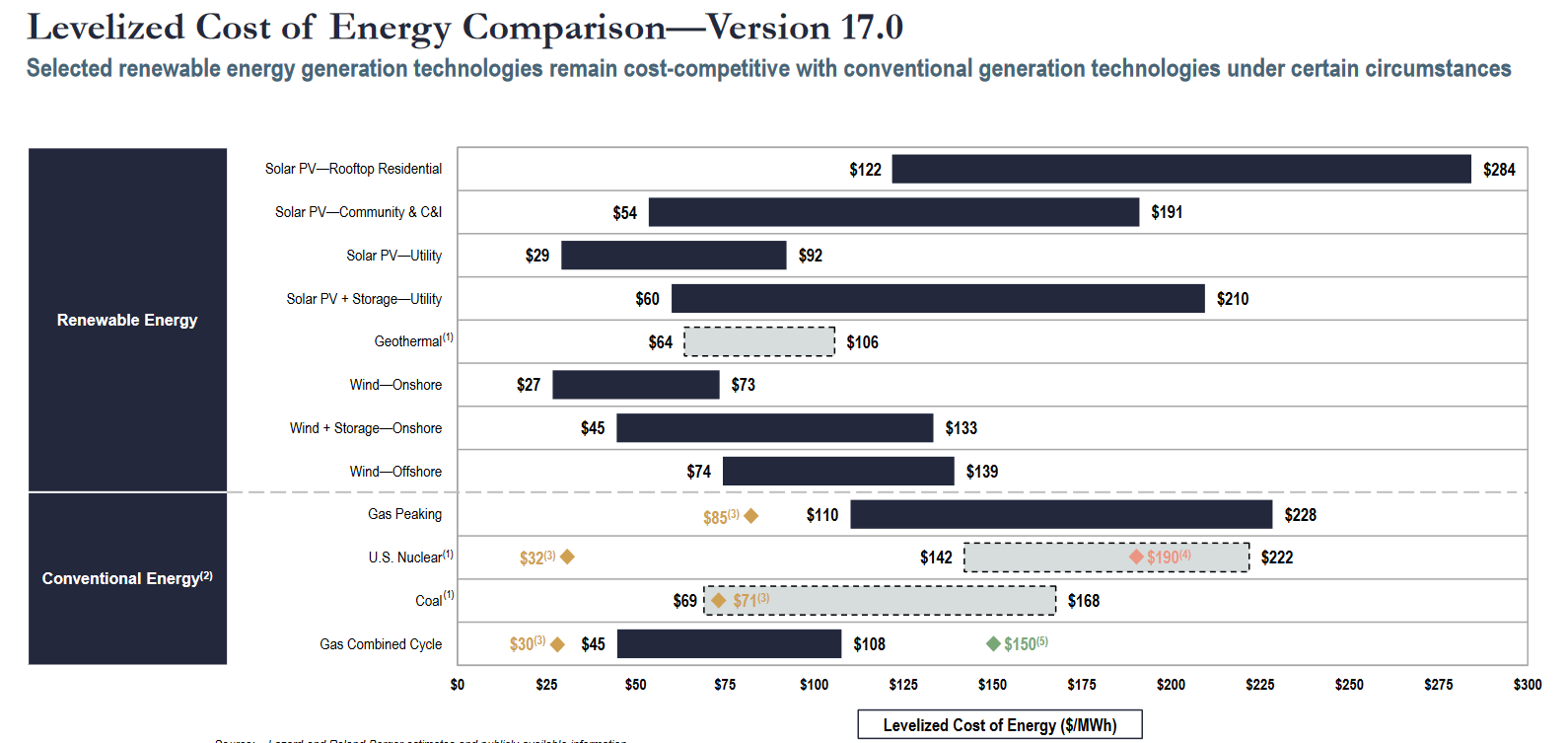
1. Google “levelized cost of energy 2025,” and you will find educated estimates of the cost per megawatt-hour (mwh) of different types of electricity generation. There you will see that wind and solar energy, unsubsidized, are the cheapest.
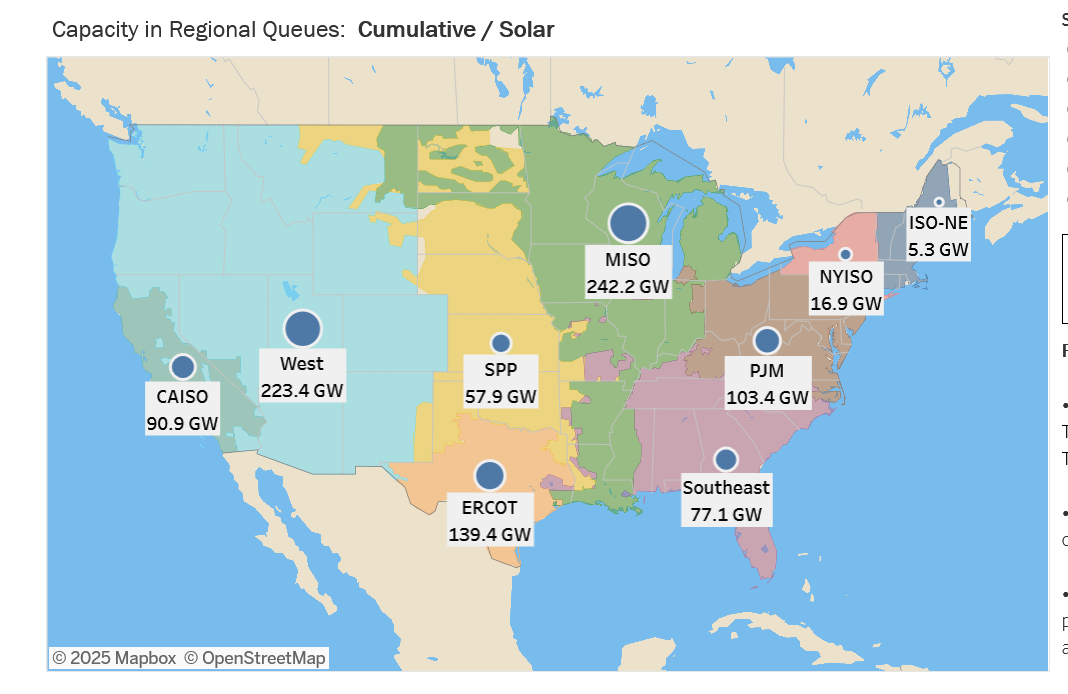
2. Next, google “maps of interconnection queues by region.” That will take you to a report by one of the national laboratories showing the number, size and types of projects that investors want to build, and are waiting to connect to the grid. Click on the PJM region and you will see that more than 100 gigawatts (GW) — which is A LOT — of projects are waiting to connect to the PJM grid. More than 75% of those are solar or batteries, the very combination that has helped my state of Texas keep the lights on and electric rates down.
Perhaps you are saying to yourself “But what about when the sun isn’t shining (or the wind isn’t blowing)?” That is a fair question. During those periods you need something else to provide power, and the good news is that Pennsylvania has lots and lots of those less weather-dependent resources already: nuclear, natural gas, coal, etc. Those resources are more expensive sources of power than wind and solar, which is why adding renewables will bring rates down. (And some of those traditional resources — coal and nuclear — are even more expensive than solar power that has been stored in batteries.)
Compare Pennsylvania’s situation with my state of Texas. According to the Energy Information Administration (EIA), Pennsylvania got 4% of its electricity from renewables last year, and retail rates were about 12% above the national average. Texas got 30% of its power from renewables and its prices were about 12 percent below the national average.
Texas has built a lot of cheap renewables and battery capacity (which shores up supply reliability). If we didn’t have less weather-dependent resources to back up wind+solar+batteries, we might have a supply or price problem. But we have those resources, and so does PJM. What PJM and Pennsylvania lack are cheap renewables.
But PJM is instead prioritizing more expensive sources of power when connecting new plants, on the mistaken assumption that renewables cannot provide reserve generating capacity. At the same time, Pennsylvania has withdrawn from the Regional Greenhouse Gas Initiative (RGGI). According to Politico, money generated from RGGI was earmarked for clean energy and transportation projects in Pennsylvania. That money will be unavailable now.
I don’t know exactly why Pennsylvania’s energy policy is such a mess. But it seems to be tied to the mistaken belief that adding renewable energy will make power more expensive than adding dirtier energy sources. That narrative is often heard from officials in the current administration and on right wing media. And Democrats who are worried about reelection may feel they have to guard against it. But by looking at the actual numbers, anyone can see that it isn’t true. So tell your friends and family the good news. Don’t let them fall into believing this particular lie. — David Spence