[Note: This will be my last post of the year. Back in early January.]
There’s been a lot of energy transition backsliding lately, some of it inevitable and some of it not. In bad political times it’s difficult to pair hope with clear-eyed realism. And I have been told that my voter-centric understanding of our political dysfunction makes people feel less than hopeful, because it implies that simple fixes (like, say, getting money out of politics) aren’t actually fixes. But pairing deep understanding with hope is important. And for those of us who believe that a low carbon emissions future will bring massive net benefits to the United States, there were some hopeful signs from recent elections.
Sifting through exit polling data from last month’s elections is always partly a tea leaf reading exercise. Collectively, those data suggest that Democrats do better when they talk about pocketbook issues. For energy policy, that means energy “affordability.”
The NYC mayoral election seemed mostly to affirm things we already knew: young progressives will turn out for a gifted, young progressive candidate, and moderate and conservative Jewish voters (who broke late for Cuomo) are still uncomfortable with candidates that they view as too hostile to Israel. And even though New Jersey has flirted with “purple” state status lately, its Republicans seem to me to be a different breed than southern and western Republicans. So I suspect the Virginia race is more generalizeable to contestable races in other parts of the country.
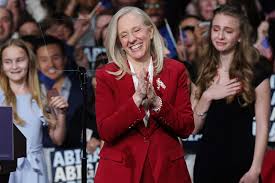
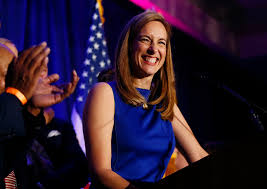
Certainly both the NJ and VA governor’s races did dispel a worry Democrats had been harboring. Trump’s defeats of Hillary Clinton and Kamala Harris had cast doubt on the idea that Democratic women candidates can amass a broad-based winning coalition, but Mikie Sherrill’s and Abigail Spanberger’s double digit wins (in the New Jersey and Virginia governor’s races, respectively) seemed to throw cold water on that idea.[1]
Abigail Spanberger’s a 15 point victory was particularly interesting. According to CNN exit polling, she won every age group, and she outperformed Harris’ 2024 vote shares among every demographic category. Here are the data (click charts to enlarge):
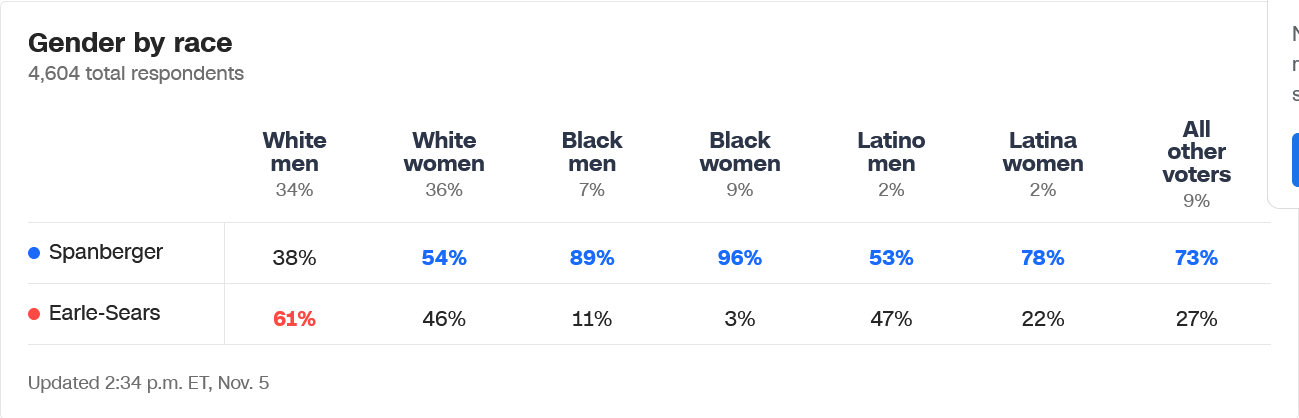
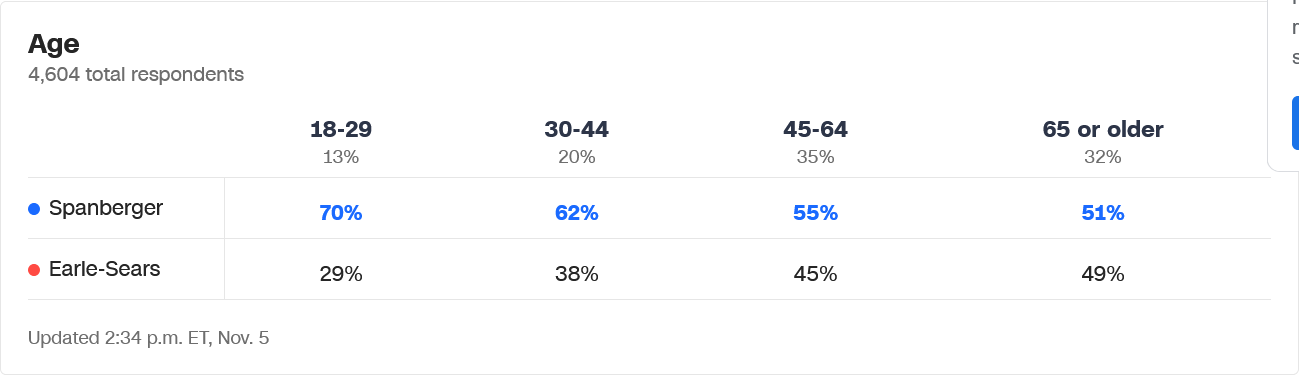
To me, two pieces of information in this data stand out, and both offer very hopeful signs for Democrats heading into the midterms.
First, even though Spanberger ran as a moderate Democrat stressing bipartisanship, she captured her biggest share of votes from the youngest voters. Indeed, her support was strongly (and inversely) correlated with voter age.
Second, Spanberger dominated the Hispanic vote, a demographic category that analysts thought Democrats might be losing to Republicans after the 2024 election. Or, as Cook Political Report described it (article behind paywall), “Latinos … snapped back from the inroads Trump made in 2024.” Analysts had suspected that Hispanic voters were put off by Democrats’ positions on culture war issues, or that Hispanic males would not support female candidates. But the Virginia data seem to undermine the latter conclusion.
Amy Walter at Cook Political Report has thrown a few drops of cold water on both observations in a December analysis (again, behind a paywall). She cites polling of Hispanic voters (by Equis) suggesting that those voters remain a difficult to predict group; and, citing polling by Yale, she argues that young voters still distrust the Democratic Party establishment even as they have soured on Trumpism. Political scientist Lakshya Jain’s analysis of polling (by moderate left group called “The Argument”) even challenges the notion that pocketbook issues drove Democrats’ gains last November.
Still, something caused the leftward surge. I would like to believe that the 2025 results reflect a dissatisfaction with Republican politicians’ shameful quiescence in the face of the Trump Administration’s unprecedented attacks on the rule of law, reliance on science, and other foundational norms of good government. Many (most?) of those go-along Republicans know that the Administration’s evisceration of the executive branch and the rule of law have hurt their constituents. But their fear of MAGA voters has cowed them.
Maybe swing voters are finally noticing that, are connecting their pain to those actions (and inactions), and are voting accordingly. Cook Political Report concluded that the Sherrill and Spanberger victories were “driven by Trump’s unpopularity.” So, maybe these election results will stiffen the spines of the go-along Republicans to stand up for their non-MAGA constituents. I hope so.
These elections also support the inference that Democrats win in purple districts by persuading some Republican voters to vote for them, not merely by turning out nonvoters. It looks like that happened in Virginia. Nate Cohn agrees:
While it’s always challenging to nail down the details of an electoral shift, the available data generally suggests that Democratic gains were driven slightly more by flipping Mr. Trump’s supporters than by benefiting from a superior turnout, at least for Abigail Spanberger in Virginia and Mikie Sherrill in New Jersey.
Republican politicians could join in repairing the harm done to good governance and our democracy by this Administration. It was a fellow Republican who helped put an end to the McCarthy era by refusing “political victory” based on “the Four Horsemen of Calumny–Fear, Ignorance, Bigotry, and Smear.” But that was an era of common media and common understandings of the truth. Given MAGA voters’ outsized influence within the GOP, it may be unreasonable to expect courageous Republicans to turn the tide in that way. It may be that restoring good government requires Democratic Party control of all three branches of government for enough time to make those repairs.
If Democrats do take control of the levers of government, can they do a better job of maintaining public support than they did during the Biden Administration? Time will tell, and a lot depends on what news bubbles swing voters inhabit. Meanwhile, I take particular hope for Democrats’ electoral future from Abigail Spanberger’s landslide win. – David Spence
————————–
[1] Electricity prices featured prominently in Sherrill’s race, and she promised to freeze or cap rates. New Jersey is a competitive electricity market where the market determines the retail price. It is also part of the PJM grid, where capacity costs (which are beyond the governor’s control) are going up. How Sherrill and other mid-Atlantic governors manage that issue will be interesting to watch. Virginia is also part of PJM, and as a home to many data centers and server farms is also a hotbed of electricity demand growth. Spanberger’s positions on energy costs were more tepid and vague than Sherrill’s, focused mostly on reducing regulatory barriers to bringing new energy supplies onto the grid.