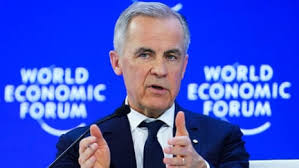
Canadian Prime Minister, Mark Carney’s January speech at Davos on the demise of the “rules based international order” garnered a lot of well-deserved praise for acknowledging the United States’ abandonment of that system, and it’s implications for the rest of the world. The gist of his remarks was that when none of the so-called great powers endorse or defend the system, the “middle powers” (like Canada and most European countries) must stick together and bargain as a group in order to avoid being bullied and exploited.
As with almost any political development, people tended to interpret the speech in ways that confirmed their own world views. Most recognized it as a realist’s assessment of recent shocks to a system from which the world had long benefited. But more than a few online commenters saw it as an admission that that rules-based order was “always a lie.” (This Reddit thread includes some good examples of both views.)
Populists on both ideological poles have long espoused the latter view, arguing that international relations, like all politics, is about power — who wins and who loses — and that rule neutrality is a smokescreen by which elites oppress the weak. A few weeks before Carney‘s Davos speech, White House Trump-whisperer Stephen Miller offered a stark version of that power politics view:
We live in a world in which you can talk all you want about international niceties, and everything else. But we live in a world, a the real world… that is governed by strength, that is governed by force, that is governed by power. These are the iron laws of the world.
And as Carney acknowledged, sometimes the powerful exempt themselves from rules. But to reject a rules-based order on that ground would throw the baby out with the bathwater. Logic and human experience have confirmed that rules-based cooperation is the better path: economically, socially, and morally.
By creating rules that aspire to fairness and neutrality, societies create the conditions for economic progress, social order, and human flourishing. That idea is the essence of the Golden Rule, of Kantian ethics, and Rawlsian distributive justice. It is why parents teach their children to divide a sweet treat (say, a piece of cake) by having one child cut it in half and letting the other choose which piece s/he wants. And hit is at the heart of the Enlightenment thinking and “civic virtue” on which the Framers of the U.S. Constitution grounded their system.
The Trump administration is doing its best to weaken the rule of law, not just internationally, but domestically as well. Indeed, its summary disregard for the law is its brand, whether it is ignoring statutory limits in regulation, flouting international law, or preventing the investigation of ICE officers who execute protestors in Minneapolis.
Ironically, Trump and the MAGA billionaires who prop up the MAGA message owe their wealth in part to the rules-based order they would now abandon. They (or in Trump’s case, his ancestors) built their fortunes in the United States because it had a stable system of property law and criminal law that protected their investments. They entered into contracts here because rules (law) ensured their enforcement. And so on. Donald Trump‘s German grandfather made his fortune in the United States. So did Trump-aligned billionaires like antichrist enthusiast Peter Thiel (from Germany) and the ketamine-erratic Elon Musk (South Africa), among others.
In international relations the story is the same. The systems of international trade set up after World War II ushered in an era of peace and prosperity in Europe that was historically unprecedented. The victors in that war chose to rebuild their vanquished enemy — Germany — because their abandonment of Germany after World War I had not worked out well. Steven Miller could not be more wrong (again). In politics, cooperation has proven the better long-term strategy over and over and over. Fascists, Marxists and cynics may dream of a world in which they can impose their will on the people they despise, but it is a pipe dream.
So, Prime Minister Carney’s realism in the face of great power bullying included a recommendation that “the middle nations” build their own economic and military strength. But it also acknowledged that “[a] world of fortresses will be poorer, more fragile and less sustainable.” Here’s hoping that the future includes restoring a rules-based order, not celebrating its demise. — David Spence
All of these rules, based orders, international and domestic, are imperfect. Sometimes the powerful get away with exploiting them to their own advantage. Fascists and Marxists dream of systems that empower them at the expense of elites they despise