[Previous posts in this series: #1 / #2 / #3 / #4]
——-
This is my penultimate “being curious-not-judgmental is good (energy) politics” post, and this one addresses how and why the climate coalition sometimes focuses on the wrong things.
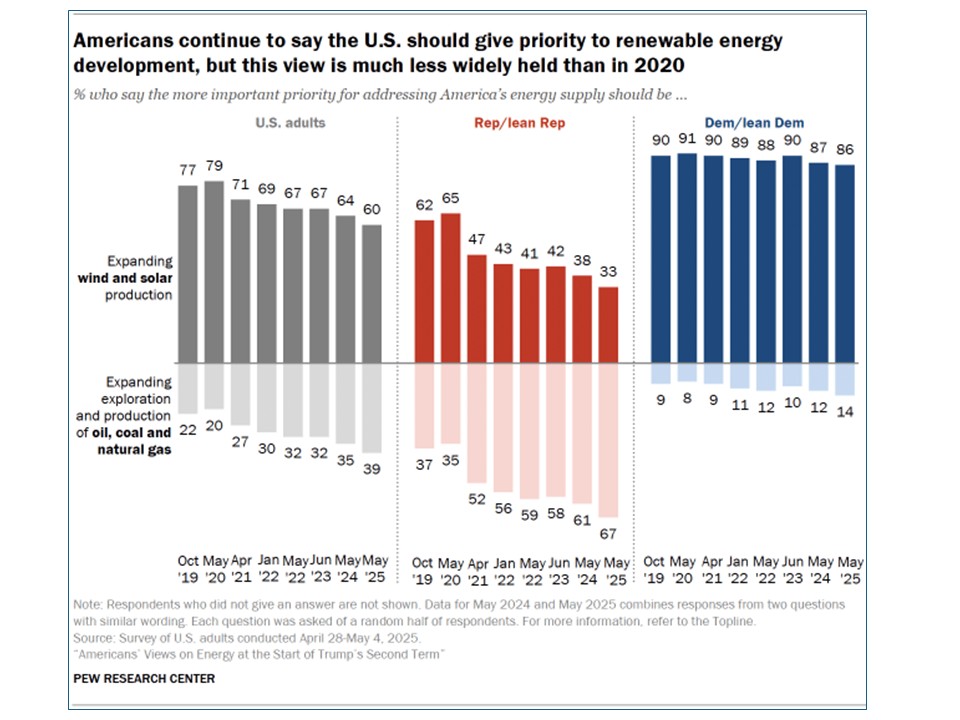
For advocates of strong climate policy, these are tough times. The GOP is turning rapidly and sharply against them (click the figure below). Red states are following the president’s lead by throwing roadblocks in the way of renewable energy development. (See also, here.) Burned by the electoral reaction to the Biden Administration’s aggressive pursuit of the energy transition, “abundance” Democrats now de-emphasize climate and stress affordability. And U.S. greenhouse gas emissions are on the rise, along with electricity demand.
The only way to achieve better climate policy — and to repair democracy — is to convince more voters to vote for the candidates who value those things. That, in turn, requires focusing on the persuadable voters and their concerns. Yet many energy transition pundits, reporters and scholars tend to focus instead on structural fixes that will not be politically viable any time soon, like (i) packing the Supreme Court (see e.g., here, here and here), (ii) adding blue states to the union (read: to the Senate), or (iii) climate-focused changes to public utility regulation that red states oppose. Or they focus on fixes that may be achievable but won’t really help at all, like term limits. Or they push fixes would help a little, such as “getting big money out of political campaigns.” but don’t really address the crux of the problem.[1]
These ideas seem to put the law cart before the politics horse. Perhaps these fixes seem attractive because bottom-up, voter-centric solutions sound too slow, or too kumbaya-ish, to some. Or perhaps people think that voters’ political views are fixed and unchangeable, so why bother?
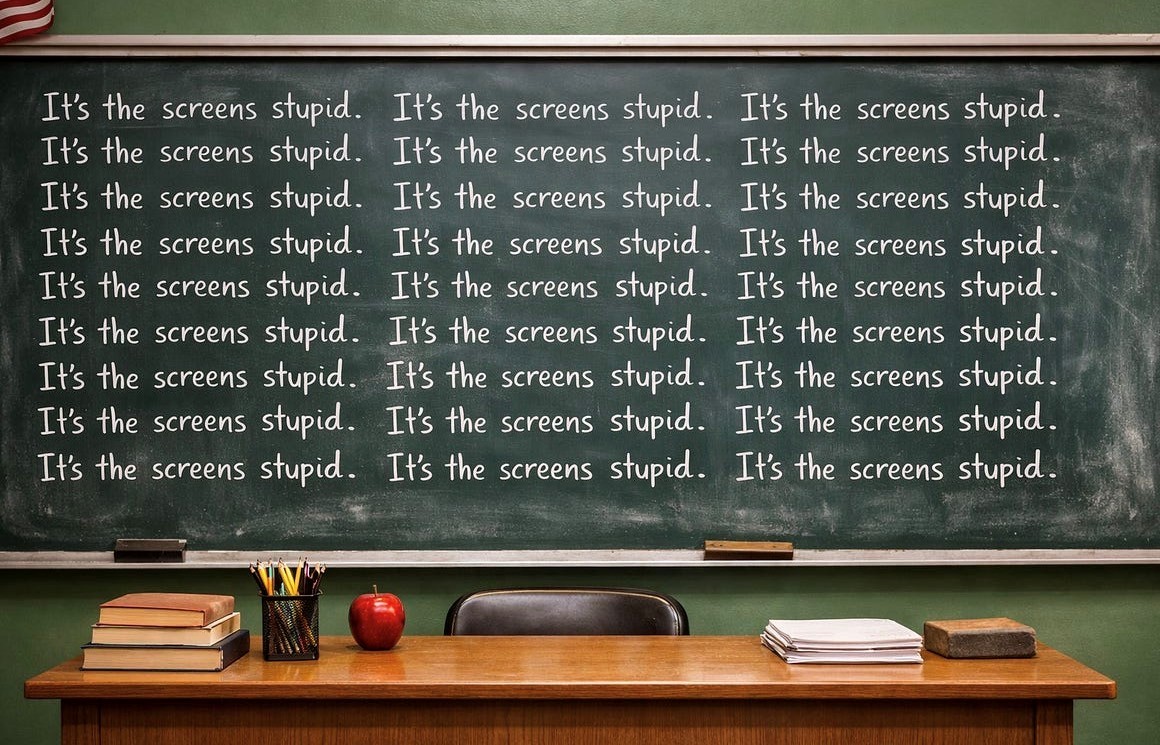
But that last point isn’t quite right. When Abraham Lincoln wrote about the “better angels of our nature,” he foreshadowed social science research showing that human nature is not fixed or immutable. Social and political institutions can bring our better angels to the fore, or push them into the background. So can opinion leaders. The propaganda machine — social and ideological media — has done the latter, making our politics more unforgiving, fearful, and violent.
The machine is still going strong, making us dumber, and angrier at one another, every day.
One structural fix would help a lot, but …
Truth be told, the Internet is only half of the problem; the other half is the outsized electoral influence exerted by the minority of angry, ideologically-extreme voters. They dominate primary elections, and so drive the behavior of most members of Congress (the 80% who represent safe seats). These forces promise to produce ever-wilder policy swings, thereby generating ever more anger and partisan tribalism, each time partisan control of policymaking branches changes hands.
Making more congressional seats more competitive would help restore influence to the median voter. But this idea is plagued by the same Catch-22 — it requires the very people who benefit from the status quo to change it. That, in turn, entails considerable political (and sometimes personal) risks for those people. For example, when principled GOP conservatives in the Indiana state legislature refused to support mid-decade gerrymandering, they risked both their physical safety and their electoral futures by incurring the wrath of the MAGA faithful who dominate Republican primaries.
The Internet amplifies the voices of those at the extremes, and helps them protect their power. It is a vicious cycle. The (clickable) figure below depicts those centrifugal forces, which are stronger than ever.
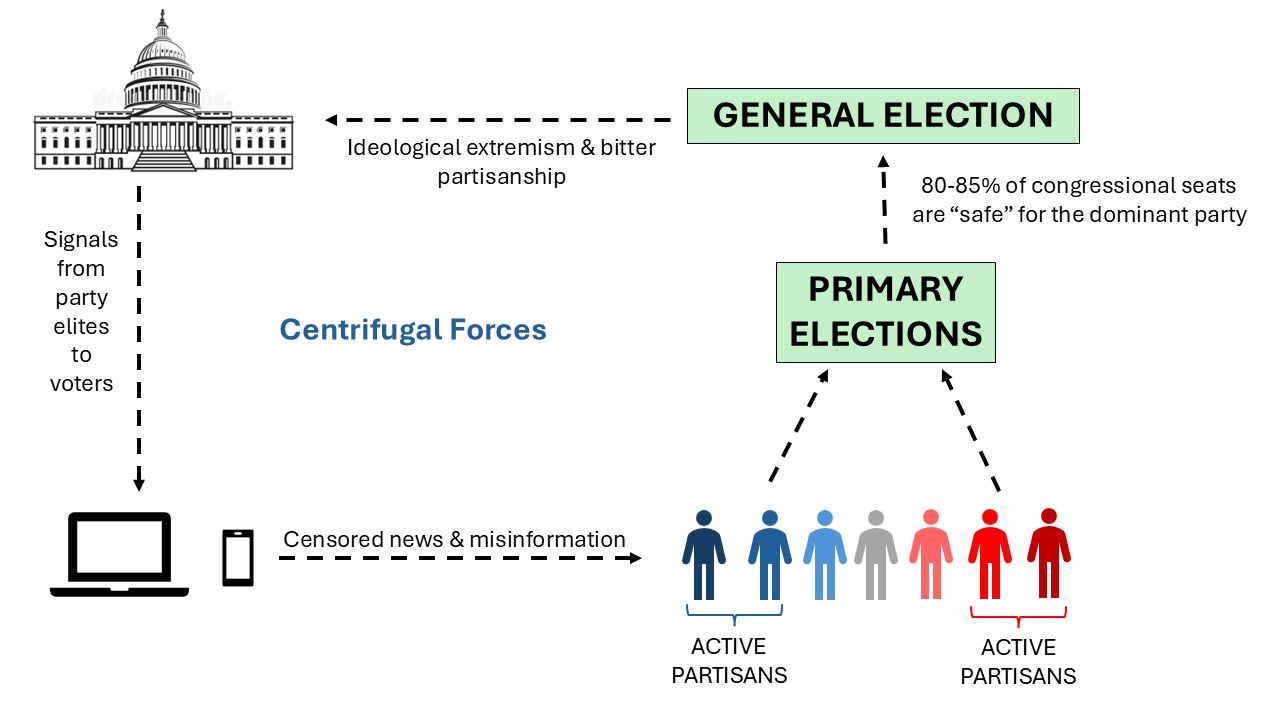
So, recovering our democracy requires addressing either or both of those dynamics. We must find ways to disrupt the influence of online propaganda, and/or restructure electoral institutions to empower the average voter. My book and this blog have preached the first alternative, mainly because the second would require bipartisan agreement that has proven elusive. But both things matter.
The “chapter 10 problem”
David French of the New York Times wrote this a couple of months ago:
If you ever write a book about a cultural or political crisis, you’ll run into something that editors call the “Chapter 10 problem.” It’s the moment when you transition from vividly describing the crisis to attempting to provide a solution … Everything that would actually fix the problem feels impossible. Everything that’s possible feels inadequate. … The Republican Party controls the elected branches of the federal government, so legislative [or constitutional] reform feels impossible.
For me, this was a chapter 6 problem. In much of the United States, voters get political information from Fox News, Joe Rogan, and the like, or from friends who get their news from those sources. Those people will never hear the case for the structural fixes described above. Most will be unaware of high-ranking MAGA leaders’ plans to transform our pluralistic democracy into some sort of Christian autocracy, and just how real those plans are. Nor will many Republican voters see anything but caricatured versions of the case for hastening the energy transition.
Encouragingly, new groups seem to be popping up whose mission is breaking the spell of propaganda by engaging voters in a slow, granular, one-voter-at-a-time way. Slow and boring? Yes, but aimed at the crux of the problem.
A pivotal moment?
But maybe events will conspire to speed up the process. To skeptics like Timothy Snyder, Anne Applebaum (and me), the Trump Administration’s efforts to lay the groundwork — rhetorically and otherwise — for rigging or overturning future elections suggests a disappearing opportunity. To optimists like David French, it suggests an emerging one.
French believes that the violent immigration crackdowns of the Department of Homeland Security are alienating voters and emboldening more Republicans to stand up to the president. That, argues French, might weaken the ability of the Border Patrol and ICE officers provide the shock troops for the Administration’s plans to “take over” the midterm elections (see also here). And some, including a Congress scholar I know, believe that attempts rig the midterms would constitute the final straw that triggers a rebellion among GOP voters. They may believe that the ouster last week of Hungarian autocrat (and MAGA favorite) Viktor Orban bolsters their case.
Early signs do point to big gains for Democrats in the House of Representatives in 2026. But for the climate coalition the important task is to effect durable change, a succession of electoral wins in consecutive cycles. Only that sort of cascade of results will enable construction of a sustained congressional majority in support of reducing greenhouse gas emissions and repairing the damage done to democratic institutions by Trumpism. Safe seats make that task more difficult, more of a long term political project.
Earlier this year Cook Political Report founder Charlie Cook (paywall) predicted that the 2026 blue wave would be smaller than the 2018 blue wave:
This is an era not just of hyperpartisanship, but of negative partisanship, in which partisans often hate the other side even more than they love their own. Many voters thus tend to see everything on a binary basis. Any given election outcome is seen as either a landslide victory or an unmitigated disaster. …
Among independents nationally, Trump’s approval ratings typically are down in the high 20s and low 30s, but gerrymandering and political self-sorting by the population has shrunk the number of purple districts, thus diluting independents’ power. There are very few Republican-held seats anywhere in that much peril.
Among Republicans, Trump’s approval ratings remain in the 80s. … So Democrats have their work cut out for them to flip many red districts.
If Cook is correct,[2] the task is to bring down that 80+% approval rating among non-MAGA GOP voters, recognizing that their news focuses on the least popular things that Democrats do and say.
It would be nice, however, if Charlie Cook turns out to be wrong, and the optimists (like David French) turn out to be right. If so, then perhaps some structural reforms to increase the influence of the average voter can be enacted.
Changes Aimed at Propaganda
Meanwhile, there are some small fixes that could help bring out our better angels, by improving the curation of online information. They don’t require government action. For example, the creation of a GoFundMe or other fund to support defamation litigation of the kind Dominion brought against Fox News in 2021. This would not require politicians’ support at all, and could check the excesses of ideological broadcast media. Similarly, social media users could pressure social media platforms to add AI chatbots warnings to posters (before they post) that the information they are posting or forwarding may be inaccurate (and directing them to the sources that challenge it).
If you believe that human nature includes both better and lesser angels, these sorts of nudges can help produce durable change.
So, I hope more and more people will work with the groups that are trying to break the spell of the Internet propaganda machine. And, we can each help that process along by talking to our families, friends, co-workers and neighbors, so that together we each move outside our respective bubbles. Maybe all those things together will help U.S. voters live more of our political lives off line — and thereby make us all more curious and less judgmental about politics. I hope so. — David Spence
NEXT (& last) POST: One final musical shout into the void
————————————–
[1] Overturning Citizens United, or more accurately, the case law preceding Citizens United that treats political spending as speech entitled to First Amendment protection, would be a good idea. But it won’t interrupt the forces breeding extremism and bitter partisan hatred.
[2] Some polls have Trump’s approval among Republicans dipping as low as 69% as of mid-April.